UM-GPT · Product design concept
Turning course information into an actionable plan.
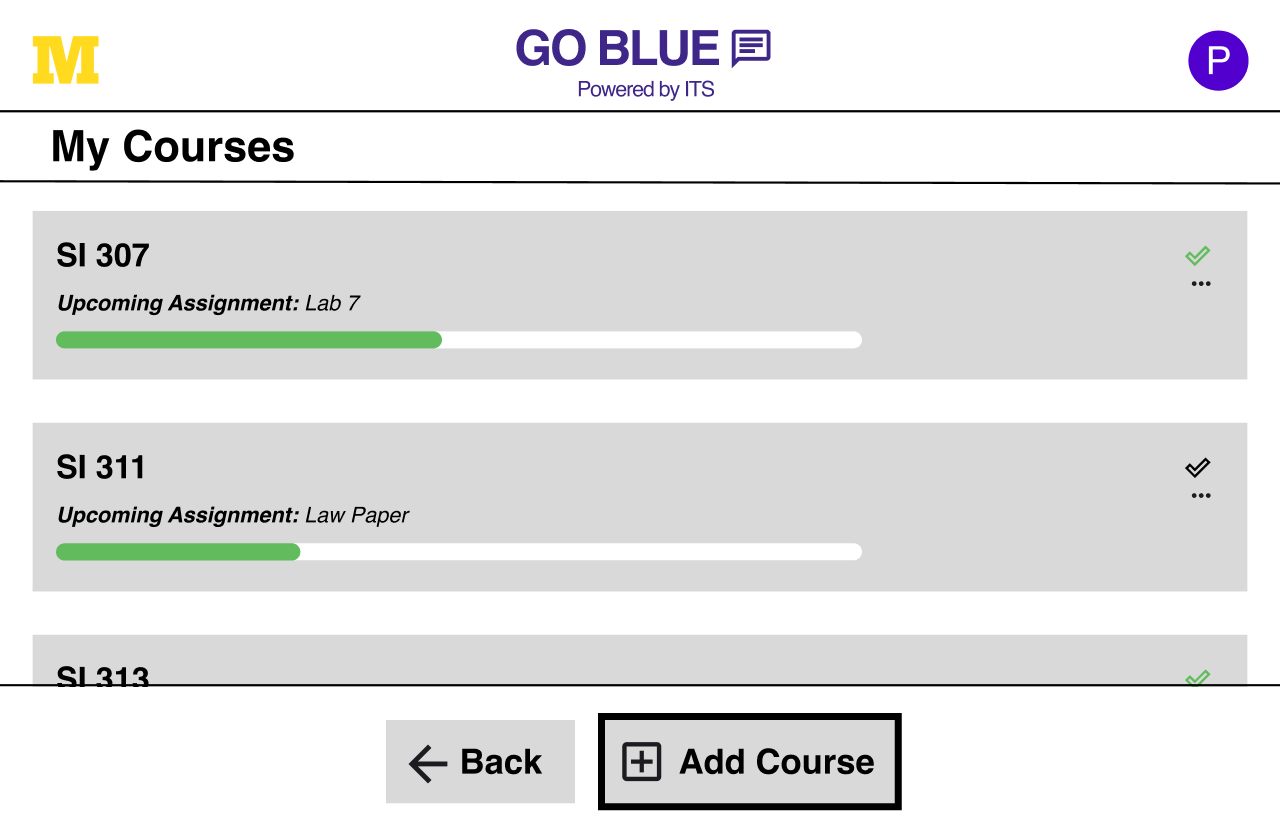
I designed an assignment tracker that helps students move from asking UM-GPT a question to organizing the work that follows—without rebuilding the same deadlines in another app.
01 · Opportunity
Answers were available. A plan was not.
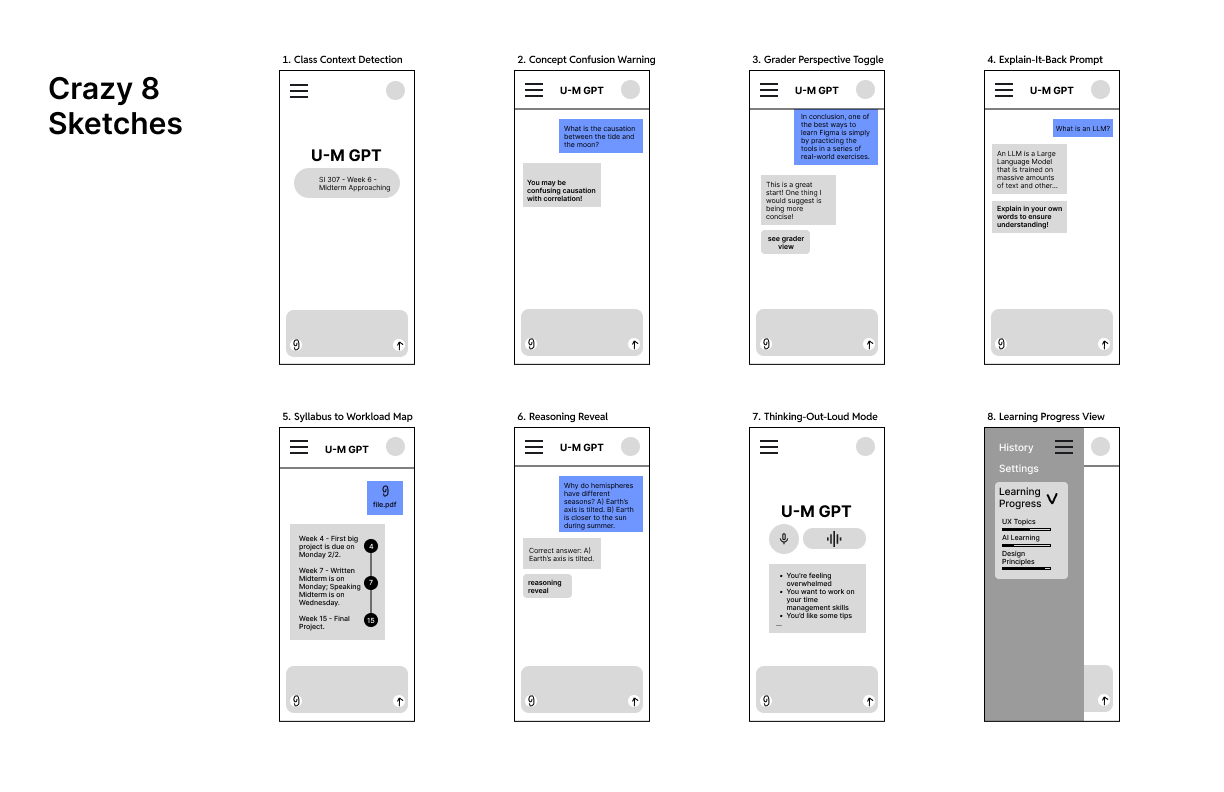
Students could ask UM-GPT about a course, but still needed another tool to track assignments, deadlines, and workload. After asking students what they wished the product could do, I prioritized assignment planning from several early feature directions.
02 · Solution
One flow from syllabus to schedule.
The concept keeps course context, assignment details, and deadline visibility together—while every generated task remains reviewable and editable by the student.
Start with the syllabus.
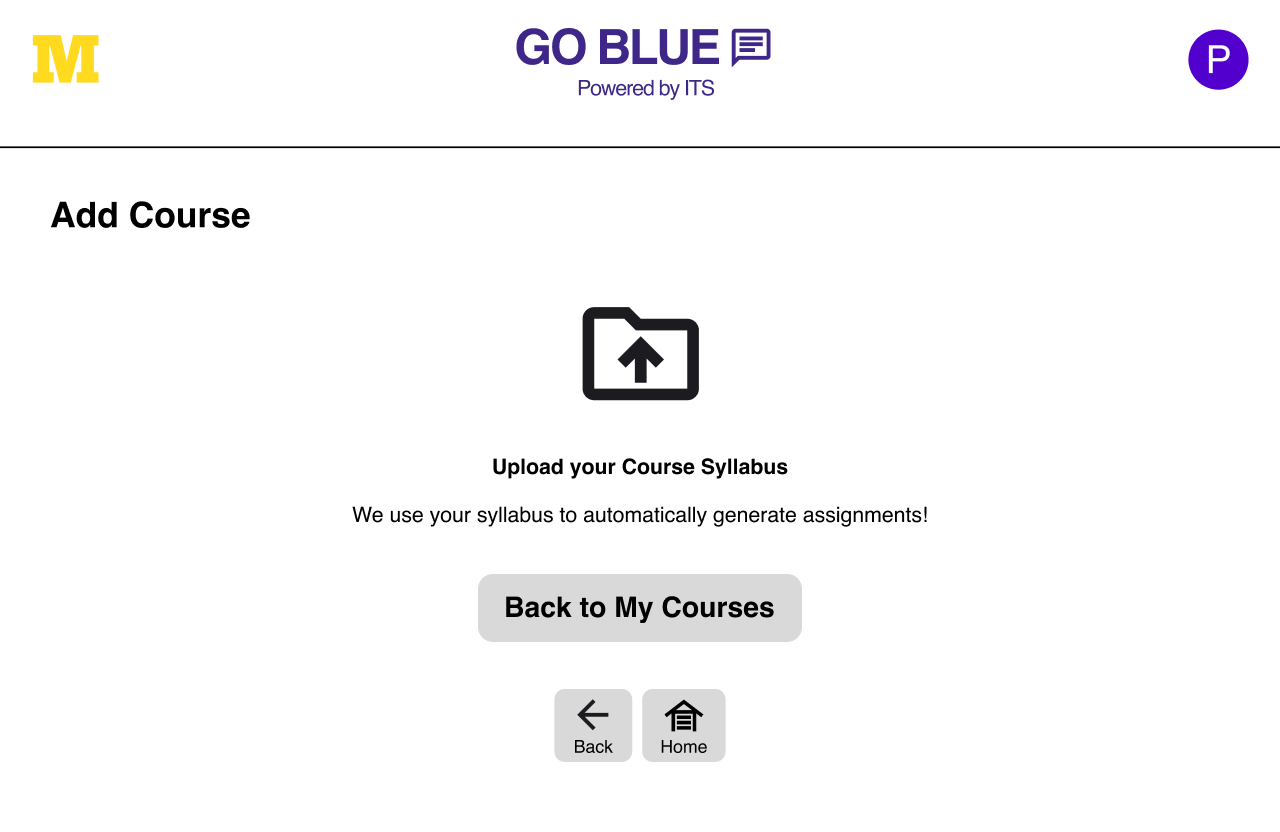
Upload a syllabus to begin an editable assignment plan.
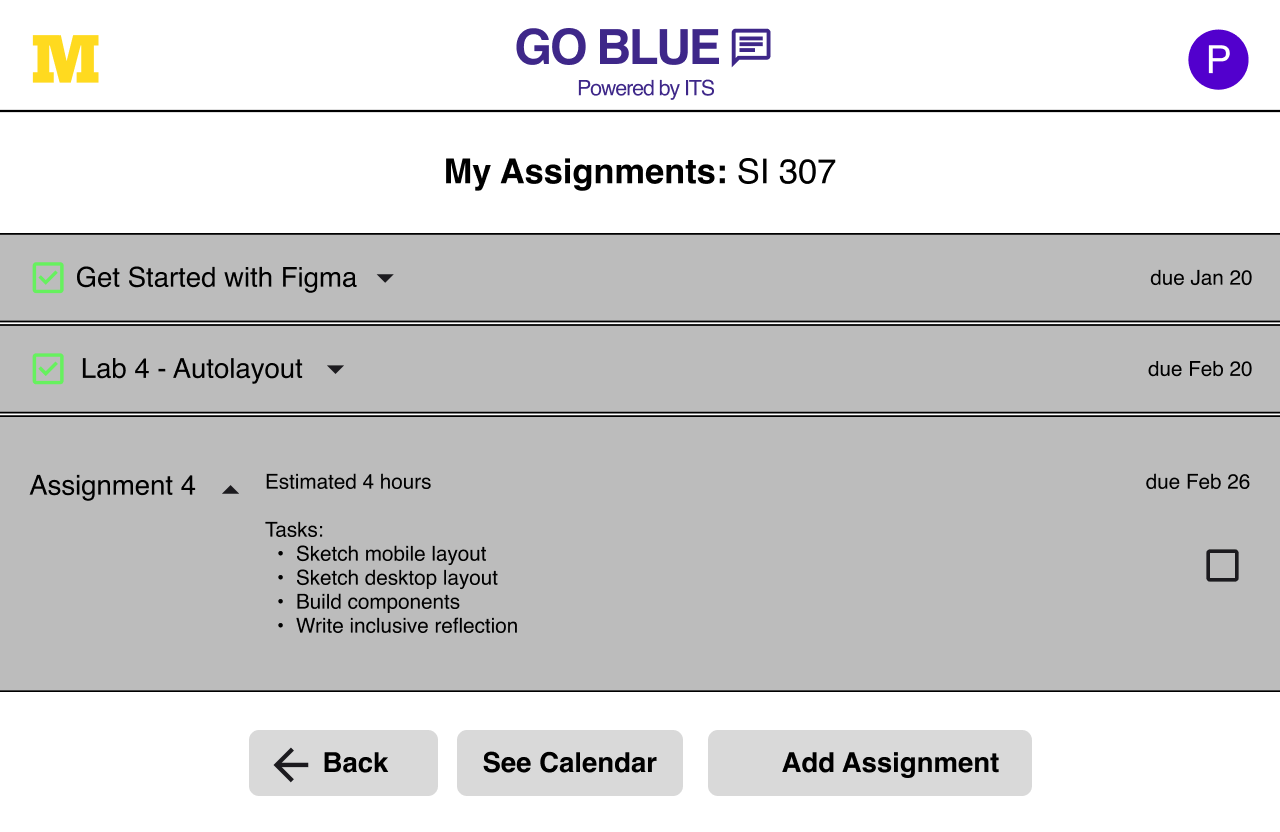
Make the work manageable.
Review details, estimate effort, and work through subtasks.
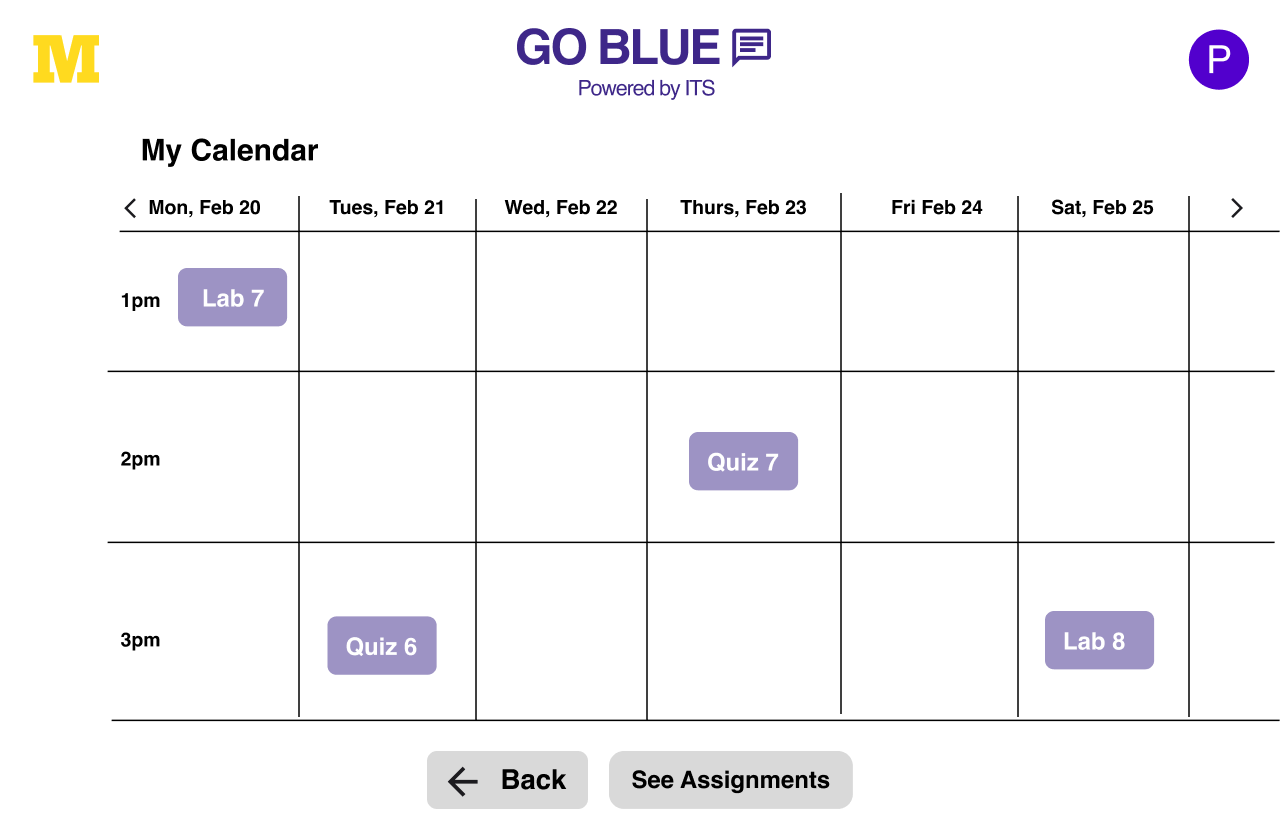
See deadlines together.
Understand the week without recreating the same information elsewhere.
03 · Prototype
A connected experience, not another disconnected tool.

The high-fidelity prototype moves from syllabus upload to an editable assignment and weekly calendar, keeping progress and next actions visible throughout.

04 · Iteration
The smallest interactions shaped trust.
Lightweight testing exposed friction that was easy to overlook in a large concept. I used those findings to make the flow more predictable and direct.
Repair the return path
Buttons did not always return users where expected, so I corrected navigation and made each next state predictable.
Remove the extra interaction
An indirect control added unnecessary work where a direct click was more familiar. I simplified the interaction.
Make system status visible
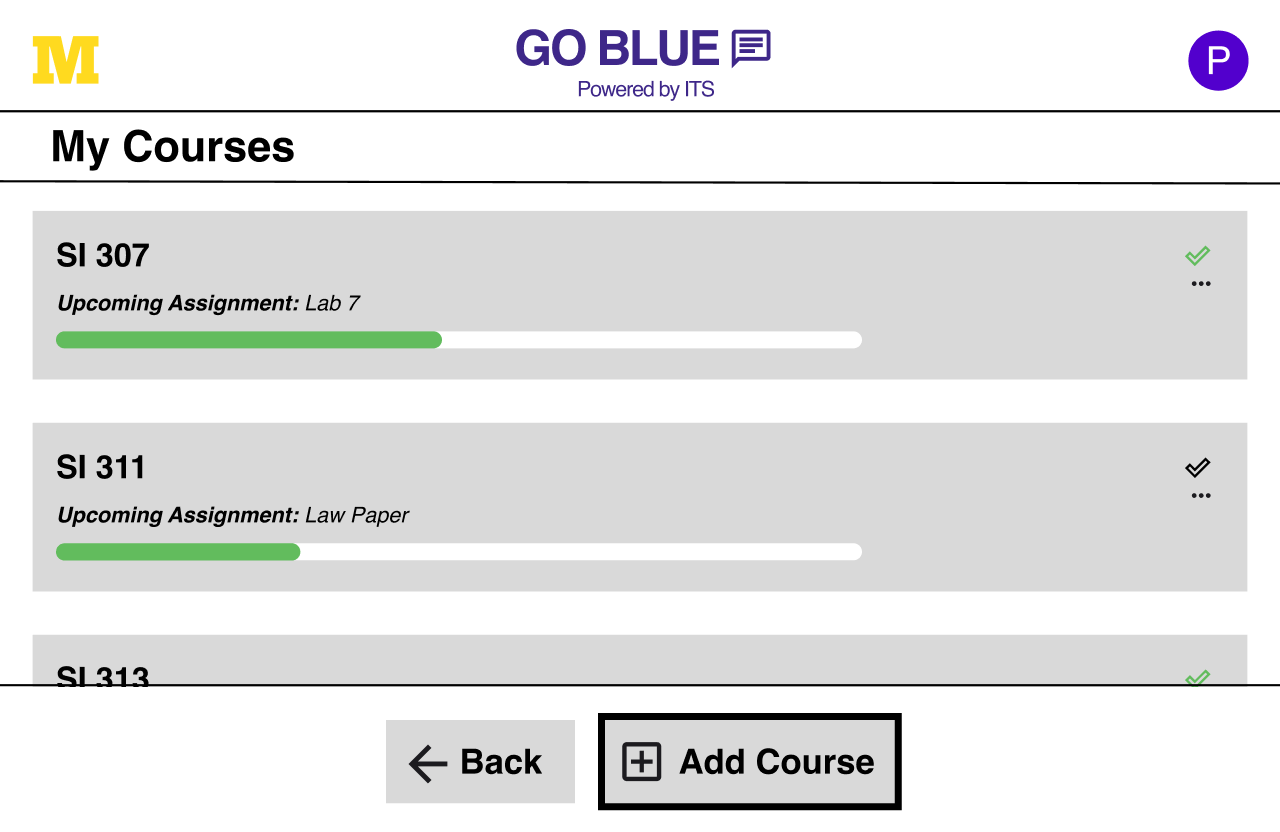
Clear progress, deadlines, and completion states helped users understand what happened and what remained.
05 · Outcome
A high-fidelity proposal built to make AI output useful.
I independently researched, designed, and prototyped the feature, then shared it with my instructor, class, and UM-GPT representatives. It remains an academic proposal—not a shipped product—but demonstrates how AI can support planning while people retain the judgment to edit, prioritize, and act.